
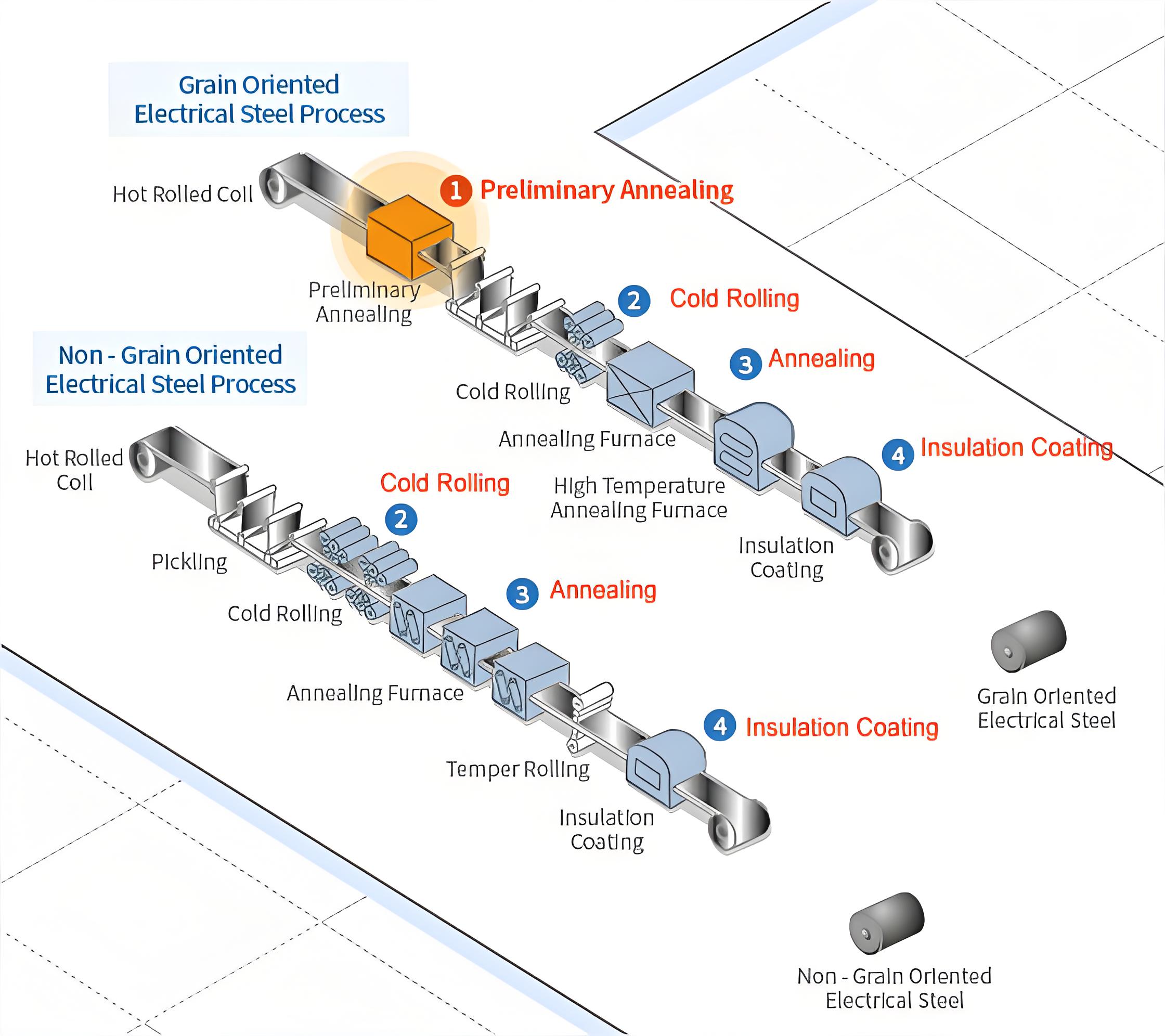
Electrical steel, also known as silicon steel or transformer steel, is a specialized flat-rolled steel product designed for magnetic applications. It is widely used in transformers, motors, generators, and other electromagnetic devices where low core loss and high magnetic permeability are required. If you're sourcing electrical steel for manufacturing or repair projects, understanding its grades and properties is essential.
Electrical steel is an iron-silicon alloy that typically contains 0.5% to 4.5% silicon. The addition of silicon increases electrical resistivity and reduces eddy current losses, making it ideal for use in alternating current (AC) magnetic circuits. This material is available in grain-oriented and non-grain-oriented grades, each serving different applications.
Grain-oriented electrical steel is processed to align the crystal structure in a specific direction, offering low core loss and high permeability in the rolling direction. It is commonly used in power transformers and large generators where efficiency is critical.
Non-grain-oriented electrical steel has a more random crystal orientation, providing uniform magnetic properties in all directions. It is suitable for rotating equipment such as motors, small transformers, and ballasts.
Low Core Loss: Reduces energy dissipation during magnetization and demagnetization cycles, improving overall equipment efficiency.
High Magnetic Permeability: Allows magnetic flux to pass through with minimal resistance, enhancing transformer and motor performance.
High Electrical Resistivity: Minimizes eddy current losses, particularly at high frequencies.
Good Mechanical Strength: Maintains structural integrity during stamping, punching, and lamination processes.
Thickness Options: Available in 0.15mm to 0.65mm thicknesses, with thinner gauges offering lower core losses at higher frequencies.
Power Transformers: Grain-oriented electrical steel is the material of choice for reducing energy losses in transmission and distribution networks.
Electric Motors: Non-grain-oriented steel is widely used in industrial motors, automotive traction motors, and HVAC systems.
Generators: Both grain-oriented and non-grain-oriented grades are used in power generation equipment, depending on the design and performance requirements.
Inductors and Ballasts: Electrical steel laminations are essential for inductive components in lighting and electronic circuits.
When choosing electrical steel for your application, consider the following factors:
Core Loss Requirements: Higher efficiency applications require lower core loss grades, which typically cost more.
Frequency of Operation: Higher frequencies favor thinner gauges with lower eddy current losses.
Magnetic Flux Density: Ensure the selected grade meets the saturation flux density requirements of your design.
Processing Requirements: Consider stamping, punching, and welding compatibility for your manufacturing process.
When sourcing electrical steel, request Mill Test Certificates to verify chemical composition, magnetic properties, and dimensional tolerances. Reputable suppliers provide full traceability and compliance with international standards such as ASTM A677, ASTM A683, and EN 10107.
For buyers working on large-scale electrical infrastructure projects, electrical steel is often specified alongside other specialty steels and copper windings. Understanding the material properties helps you coordinate procurement and ensure consistent quality across components.
Electrical steel is a critical material in modern power systems. By selecting the right grade and specification for your specific application, you can achieve both energy efficiency and long-term reliability.
RELATED POSTS
CONTACT US
MESSAGE
If you have any questions, please contact us and we will contact you as soon as possible.
Please give us a message